
How Long Do Wood Decks Last Compared to Low-Maintenance Alternatives?
- Duradek of Colorado

- 22 hours ago
- 4 min read
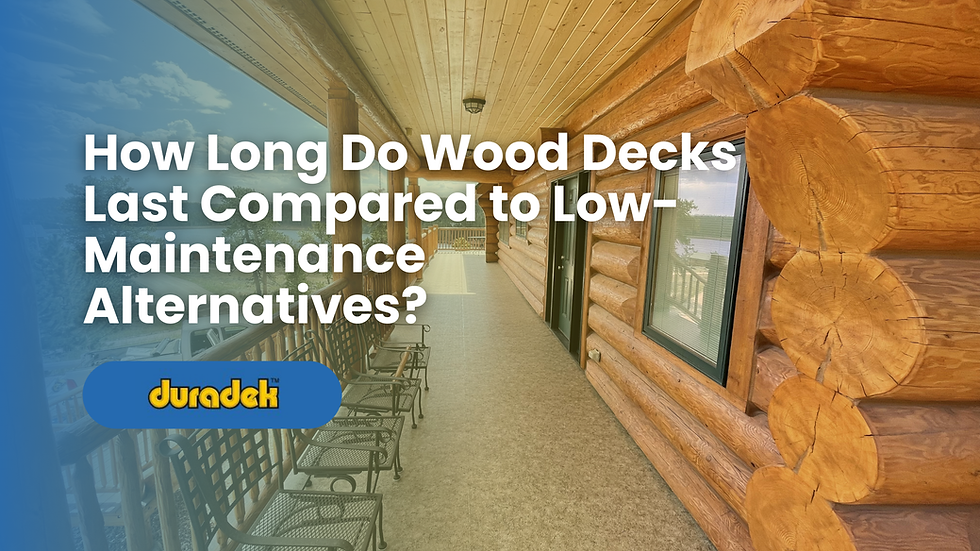
If you are researching outdoor upgrades, you have probably asked yourself how long do wood decks last compared to modern, low-maintenance options. The answer depends on climate, installation quality, and maintenance habits. In Colorado, where sun exposure is intense and freeze-thaw cycles are common, lifespan becomes even more important.
Choosing the right decking material affects not only appearance, but also long-term cost and structural integrity.
At Duradek of Colorado, we work with homeowners across Denver, Wheatridge, Broomfield, and Littleton who want decks built specifically for Colorado conditions. In this blog, we'll break down realistic lifespan expectations and what influences performance.
How Long Do Wood Decks Last in Colorado?
When homeowners ask how long wood decks last, the typical range is 10 to 20 years. That estimate assumes proper installation, routine sealing, and consistent maintenance.
The most common wood decking material is pressure-treated lumber. In dry climates, this type of wood can perform reasonably well. However, Colorado presents challenges:
Strong UV exposure at higher elevations
Snow accumulation and ice
Rapid freeze-thaw cycles
Spring moisture from snowmelt
Over time, these factors cause boards to crack, warp, split, and fade. It becomes inevitable to seal and stain the floor over the seasons. If this maintenance step is skipped, deterioration accelerates. Structural components such as joists and beams may last longer, but the surface boards often need replacement sooner.
According to several professional builder resources, proper construction and material selection significantly affect deck longevity. Even well-built wood decks still require ongoing upkeep to reach their full lifespan.
Maintenance and the Real Answer to How Long Do Wood Decks Last
As mentioned before, maintenance plays a major role in answering how long wood decks last. To keep the wood intact over time, it usually requires:
Cleaning at least once per year
Sealing or staining every 2 to 3 years
Fastener inspections
Board replacement when splitting occurs
Skipping maintenance can shorten the lifespan of your deck dramatically because UV rays break down surface fibers, moisture penetrates cracks, and freeze expansion widens small gaps. Over time, boards weaken and may become unsafe.
While some homeowners enjoy the look of natural wood, they often underestimate the time and money commitment that it needs. The labor and refinishing costs that are required to maintain natural wood floors can add up over 10 or 15 years. When evaluating true lifespan, factor in both durability and maintenance effort.
How Long Do Wood Decks Last Compared to Composite Decking?
Composite decking typically lasts 25 to 30 years or longer. Unlike wood, composite boards resist:
Rot
Insect damage
Splintering
Surface cracking
Composite does not require staining or sealing. Usually, cleaning it with soap and water is enough to keep it looking great.
As noted in trend discussions, Colorado homeowners are increasingly choosing composite for its durability and minimal upkeep. While the upfront investment is higher than wood, the reduced maintenance often offsets that difference over time.
For homeowners asking how long do wood decks last versus composite, the difference can easily be a decade or more in favor of composite materials.
Waterproof Vinyl Decking and Lifespan Performance
Another category to consider is fully waterproof vinyl membrane systems. These are especially valuable for elevated decks, balconies, and rooftop patios.
Duradek vinyl decking functions as both the walking surface and waterproof barrier. This protects the framing below from moisture damage. That design can significantly extend the structural lifespan of elevated decks.
Duradek vinyl comes with a 15-year waterproofing warranty and a 15-year manufacturer warranty. Because the waterproof layer is integrated into the surface, you avoid the peeling, flaking, and moisture penetration common with wood surfaces.
When homeowners compare options and revisit the question how long do
wood decks last, they often realize the answer changes when waterproofing is involved. Wood exposed to moisture from above and below degrades faster. A fully waterproof system reduces that risk.
Aluminum Railings and Long-Term Performance
Deck longevity also depends on railing systems. Wood railings age quickly in Colorado’s climate because, just like wooden floors, they crack, fade, and require repainting.
Aluminum railing systems offer a longer service life with minimal upkeep. Aluminum resists rust, corrosion, and UV degradation, and when paired with low-maintenance decking, aluminum railings create a cohesive, durable outdoor system.
Even though a deck surface may last 20 to 30 years, if you pair it with mismatched railing materials, this could require replacement earlier. This is why it's crucial for you to coordinate the materials across your entire deck, to get the most of its overall performance.
Cost Over Time: Wood vs Low-Maintenance Alternatives
Let’s look at long-term cost, not just initial installation.
Wood Deck Over 20 Years:
Initial lower cost
Multiple staining cycles
Board replacements
Possible structural repairs
Higher labor over time
Composite or Vinyl Deck Over 20 Years:
Higher upfront cost
Minimal surface maintenance
Fewer repairs
Stable appearance
When homeowners calculate refinishing costs, labor, and replacement boards, the financial gap narrows. For many families, time savings alone justify low-maintenance materials.
Structural Integrity and Colorado Climate
Colorado building professionals understand local soil movement, frost depth, and drainage. Proper installation matters as much as material choice. As outlined in discussions about professional deck construction, code compliance and structural design are essential for longevity.
No matter how good the surface boards are, poor drainage or improper footings reduce lifespan. That's why hiring experienced installers is critical when comparing how long wood decks last versus engineered alternatives.
So, How Long Do Wood Decks Really Last?
To summarize clearly:
Basic pressure-treated wood: 10 to 15 years with average maintenance
Well-maintained wood: up to 20 years
Composite decking: 25 to 30 years or more
Waterproof vinyl systems: 20+ years with integrated protection
In Colorado’s climate, moisture control and UV resistance make a measurable difference. Although wood can perform well with dedication and upkeep, low-maintenance systems provide more predictable longevity with less ongoing effort.
Choosing What Works for Your Home
At Duradek of Colorado, we help homeowners compare real lifespan expectations, not marketing claims. We design decks that match your style, your budget, and Colorado weather.
If you are still asking how long do wood decks last and whether wood is the right choice for your property, we can walk you through side-by-side comparisons. We install:
Waterproof Duradek vinyl decking
Tiledek under-tile systems
Durarail aluminum railings
Structurally sound framing built to local code
Our goal for your home is clear: build a deck that looks great and performs for decades. If you're planning a new deck in Denver or along the Front Range, contact us today so we can evaluate your site and recommend materials that fit your long-term goals.


Comments